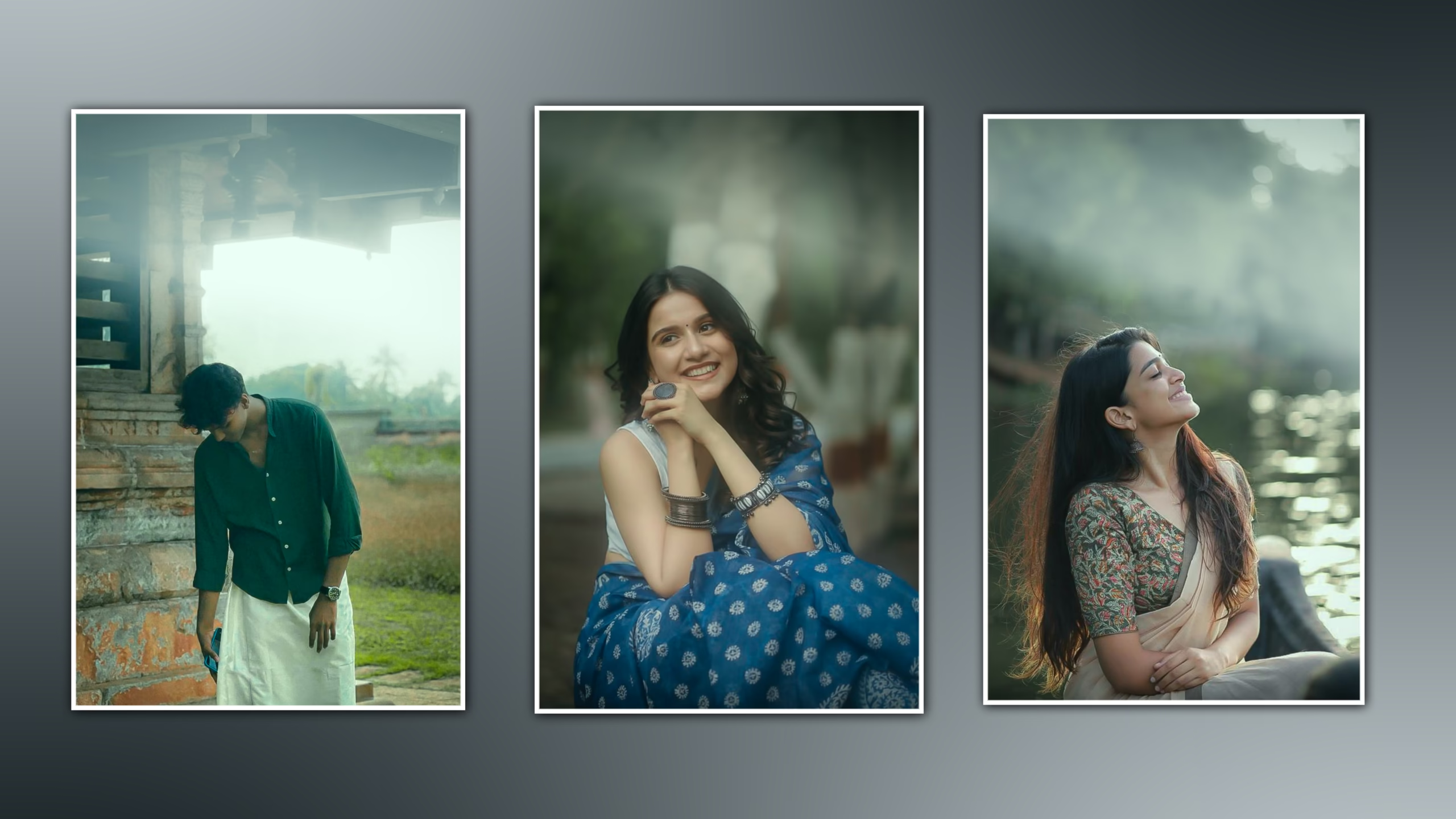
Photo editing is an essential part of digital photography, social media, blogging and content creation. Whether you are a beginner shooting with your smartphone or a professional photographer shooting with a DSLR or mirrorless camera, editing your photos can dramatically improve the overall quality of your photos. Adobe Lightroom is one of the most trusted and powerful photo editing applications in 2026 today. With better masking tools, faster editing performance, and smart artificial intelligence (AI), Lightroom makes it possible to turn your average photos into something that looks like a pro shot – all with just a few clicksPhotograph editing is crucial in digital photography and other applications such as social media and blogging. Regardless of whether you are a novice taking pictures using a smartphone or an expert taking photographs using a DSLR or mirrorless camera, photograph editing will greatly help enhance the quality of your photographs. In 2026, there is one of the most popular and best photo editing software known as Adobe Lightroom. With enhanced masking tools, improved editing speed, and intelligent AI technology, Lightroom can help you enhance your photographs to appear like those taken by an expert.
Unlike many editing apps, Lightroom employs a non-destructive editing system that does not permanently change your original photo. This way your original image is always protected and you can experiment freely without any fear of losing the quality of your image. The latest version also has smarter AI features that automatically detect subjects, skies, backgrounds, and objects, making professional editing easier than ever.
With This comprehensive guide will teach you everything that you need to know about Lightroom Photo Editing in 2026. The topics covered include the latest features, essential tools required, process of editing, correct settings, mistakes to be avoided, and some frequently asked questions. This guide will ensure that you edit your photographs effectively whether you are doing it for Instagram, YouTube thumbnails, your projects or your own portfolio.
What is Lightroom Photo Editing 2026?
Lightroom Photo Editing Software is a professional-grade photo editing tool made especially for photographers. It helps in managing as well as exporting photos by making edits to the photos without compromising their quality.
Version 2026 of Lightroom has got smarter than previous versions as it uses AI technology to identify the elements in a photo. With the help of AI tools, it has become possible to automate manual tasks and make precise and realistic edits to the photos.
Some of the major improvements introduced in Lightroom 2026 include:
Faster AI-powered masking
Improved object removal
Better portrait enhancement
More accurate skin tone correction
Advanced color grading controls
Enhanced RAW image processing
Better cloud synchronization
Faster export speeds
Improved mobile editing experience
These updates make Lightroom suitable for beginners while still offering the advanced controls that professionals require.
My Experience and Testing Results
Over the past few weeks, I tested Lightroom 2026 on a variety of image types, including outdoor portraits, travel photography, landscape images, indoor photos, product photography, and low-light shots. My goal was to evaluate both the editing quality and the speed of the new AI-powered tools.
I immediately saw how the new technology could detect the subjects. The masking of the AI could easily recognize people, skies, buildings, and background elements in seconds. Previously, such operations would need to be done manually, but this version of Lightroom 2026 will drastically decrease the editing process.
The color correction seems more polished now too. Tones of the skin are more natural, there is more information left in the shadows, and the highlight recovery works great. The noise reduction does wonders for high ISO images without making them look fake.
Another major improvement is the faster export process. Even large RAW files export more quickly while maintaining excellent image quality.
After testing multiple editing workflows, I found Lightroom 2026 to be one of the most efficient photo editing solutions currently available. Both beginners and experienced photographers can achieve professional-quality results with minimal effort.
Required Tools
Before starting your editing process, make sure you have everything needed for the best results.
Adobe Lightroom
Download and install the latest version of Adobe Lightroom to access the newest AI features and performance improvements.
High-Quality Photos
Whenever possible, shoot in RAW format. RAW files preserve more image information, allowing greater flexibility during editing.
Computer or Mobile Device
Lightroom works on Windows, macOS, Android, and iOS devices. Desktop versions provide additional control, while mobile editing offers excellent flexibility.
Stable Internet Connection
Certain AI-powered tools and cloud synchronization features require an internet connection.
Lightroom Presets (Optional)
Presets can help speed up your workflow, but they should always be adjusted according to each image instead of being applied blindly.
External Backup
Store your original images on an external drive or cloud storage to prevent accidental data loss.
Full Editing Workflow
A consistent editing workflow helps produce professional results while saving time.
Step 1: Import Photos
Import your RAW or JPEG images into Lightroom and organize them into folders or collections.
Step 2: Crop and Straighten
Adjust the composition by cropping unnecessary elements and straightening the horizon if required.

Step 3: Correct Exposure
Increase or decrease exposure until the overall brightness appears balanced.
Step 4: Adjust White Balance
Correct the image temperature to achieve natural colors.
Step 5: Recover Highlights and Shadows
Reduce highlights to recover bright areas while increasing shadows to reveal hidden details.
Step 6: Improve Colors
Adjust vibrance and saturation carefully to make colors more attractive without looking unrealistic.
Step 7: Apply AI Masking
Select the subject, sky, or background individually and make targeted adjustments.
Step 8: Enhance Details
Improve texture, clarity, and sharpening to create crisp and professional images.
Step 9: Reduce Noise
Apply luminance and color noise reduction for cleaner photos, especially in low-light conditions.
Step 10: Export
Export your edited image using the correct resolution, quality settings, and color profile.
Step-by-Step Lightroom Editing Guide Import Your Images
Open Lightroom and import all your photos into a new catalog or collection. Organizing images before editing saves time later.
Basic Light Adjustments
Start by adjusting:
Exposure
Contrast
Highlights
Shadows
Whites
Blacks
These settings establish the overall balance of your image.
Color Correction
Next, fine-tune the colors by adjusting:
Temperature
Tint
Vibrance
Saturation
Aim for natural-looking colors instead of overly vibrant edits.
AI Masking
Use Lightroom’s AI masking tools to separately edit:
Subject
Sky
Background
Hair
Clothing
Objects
Selective editing creates depth and gives your photos a polished appearance.
Detail Enhancement
Increase texture and sharpening carefully while avoiding excessive values that create unnatural-looking images.
Apply noise reduction if necessary, especially for night photography.
Color Grading
Use Lightroom’s Color Grading panel to add subtle cinematic tones or enhance mood while maintaining realistic colors.
Export Settings
Choose:
JPEG format
sRGB color profile
Quality between 85–100%
Appropriate image dimensions based on your intended use
Best Lightroom Settings in 2026

Although every image requires individual adjustments, the following settings provide an excellent starting point.
Exposure: +0.20 to +0.50
Contrast: +10
Highlights: -40
Shadows: +30
Whites: +15
Blacks: -15
Texture: +10
Clarity: +8
Dehaze: +5
Vibrance: +20
Saturation: +5
Sharpening: 40–60
Noise Reduction: 10–25
Remember that these values are only starting points. Lighting conditions, camera settings, and artistic preferences will influence your final adjustments.
Common Mistakes to Avoid
Many beginners unintentionally reduce image quality by making excessive adjustments.
Some of the most common mistakes include:
Overediting
Adding too much contrast, clarity, or saturation often makes images look unnatural.
Incorrect White Balance
An inaccurate white balance can cause photos to appear too blue or too orange.
Excessive Sharpening
Over-sharpened images introduce halos and unwanted artifacts around edges.
Ignoring the Histogram
The histogram helps identify clipped highlights and crushed shadows, making it an essential editing tool.
Overusing AI
AI tools are extremely helpful, but manual refinements often produce the best final results.
Exporting at Low Quality
Always export high-quality files, especially if the images are intended for websites, portfolios, or client delivery.
Applying the Same Preset Everywhere
Every photo has different lighting conditions. Adjust presets individually instead of relying solely on one-click edits.
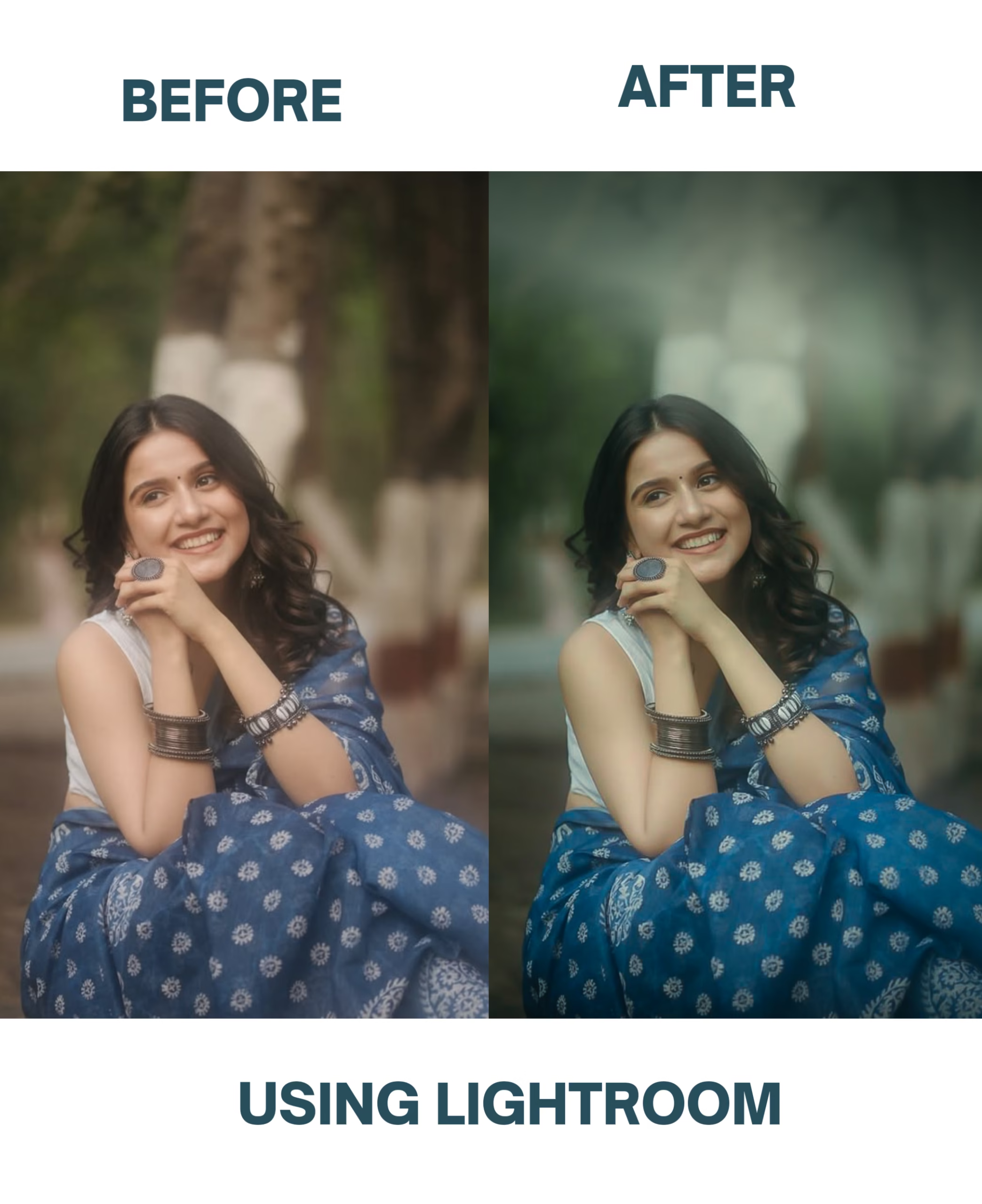
PRESET LINK : DOWNLOAD
Frequently Asked Questions
Is Lightroom still worth using in 2026?
Absolutely. Lightroom remains one of the industry’s leading photo editing applications because of its AI-powered tools, excellent image quality, and efficient workflow.
Is Lightroom beginner-friendly?
Yes. Although Lightroom offers professional-level controls, beginners can quickly learn the basics thanks to its intuitive interface and automatic editing features.
Can Lightroom edit RAW photos?
Yes. Lightroom is specifically designed to edit RAW files while preserving maximum image quality.
Does Lightroom use AI?
Yes. Lightroom 2026 includes AI-powered masking, object removal, automatic subject detection, portrait enhancement, and intelligent editing suggestions.
Which is better: Lightroom or Photoshop?
Lightroom is ideal for editing and organizing photographs, while Photoshop is better suited for advanced retouching, graphic design, and image manipulation.
Can Lightroom run on mobile devices?
Yes. Adobe Lightroom is available for Android and iOS, allowing users to edit photos on smartphones and tablets with cloud synchronization across devices.
What file type is better for editing?
Raw file formats give users greater freedom when editing because they contain more information compared to jpeg formats.
Do I have to use presets?
Presetting can make editing easier, yet it needs to be adapted to each specific picture to get the best outcome..
Conclusion
2026: Lightroom Photo Editing becomes more convenient, intelligent and advanced than ever before. The smart AI tools in 2026 not only shorten the editing process but also give users the ability to edit their pictures into professional standard without much effort at all. All that you need to get perfect, natural looking images with Lightroom is right here.
Good editing is not so much about making random adjustments, but more about creating a workflow. First, fine-tune exposure and white balance. Next, do a gradual colour correction. Use AI masking sparingly. Lastly, sharpen and export with the proper settings. Don’t overedit, be mindful of the histogram and always retain the natural look of your photographs.
With regular practice and a good knowledge of the tools of Lightroom, you’ll be able to create stunning images that will stand out in 2026 and beyond.. Whether you’re a hobbyist, blogger, influencer, or professional photographer, mastering Lightroom is a valuable skill that will continue to improve the quality of your work.